

AI Consulting Services Australia — The Complete Guide
By Isaac Patturajan — Managing Director, Anitech AI
Introduction: The AI Imperative for Australian Business
Artificial intelligence is no longer a futuristic concept reserved for Silicon Valley tech giants. For Australian businesses across every sector, AI has become a strategic imperative that separates market leaders from laggards. Whether you are running a mid-sized manufacturing operation in Melbourne, a financial services firm in Sydney, or a healthcare provider in Brisbane, the question is no longer if you should adopt AI, but how to do it effectively.
At Anitech AI, we have spent over two decades guiding Australian organisations through digital transformations. We have witnessed firsthand how properly implemented AI solutions can reduce operational costs by 30%, accelerate decision-making processes, and unlock entirely new revenue streams. However, we have also seen the costly mistakes that occur when businesses attempt to navigate the complexities of AI implementation without expert guidance.
This comprehensive guide draws on our experience delivering more than 200 successful AI projects across Australia. We will walk you through everything you need to know about AI consulting services—from understanding what consultants actually do, to selecting the right partner, to measuring the return on your AI investments. Whether you are just beginning your AI journey or looking to scale existing initiatives, this guide provides the practical, Australian-focused insights you need to succeed.
What is AI Consulting?
Defining the Service
AI consulting is a specialised professional service that helps organisations identify, plan, implement, and optimise artificial intelligence solutions to achieve specific business objectives. Unlike general IT consulting, AI consulting requires deep expertise in machine learning algorithms, data science, computational infrastructure, and the unique challenges of deploying intelligent systems in production environments.
At its core, AI consulting bridges the gap between AI’s theoretical potential and practical business application. Consultants translate complex technical concepts into actionable business strategies, ensuring that AI investments deliver measurable value rather than becoming expensive science experiments.
The Value Proposition
The value of engaging an AI consulting partner extends far beyond technical implementation. A qualified consultant provides:
- Strategic clarity: Helping leadership teams understand where AI can genuinely deliver ROI versus where it is simply not the right solution
- Risk mitigation: Navigating the technical, regulatory, and ethical pitfalls that derail AI projects
- Accelerated time-to-value: Leveraging proven methodologies and pre-built components to compress implementation timelines
- Capability building: Transferring knowledge to internal teams so organisations become self-sufficient
- Vendor neutrality: Providing objective advice on technology choices without pushing specific products
When to Engage an AI Consultant
We at Anitech AI typically see organisations seek consulting support at several key inflection points:
Exploration phase: You recognise AI’s potential but lack internal expertise to evaluate opportunities. A consultant can conduct feasibility studies, identify high-value use cases, and build the business case for investment.
Strategy development: You need a coherent AI roadmap that aligns with broader business objectives. This involves prioritising initiatives, estimating resource requirements, and establishing governance frameworks.
Implementation support: You have identified AI opportunities but require assistance with technical execution—whether that means building custom models, integrating vendor solutions, or modernising data infrastructure.
Optimisation and scaling: You have piloted AI solutions but struggle to expand them across the organisation or achieve expected performance levels.
Crisis recovery: Previous AI initiatives have failed or underdelivered, and you need expert help diagnosing problems and charting a new course.
The Australian AI Landscape
Market Context and Maturity
Australia’s AI market has evolved significantly over the past five years. According to recent data from the Australian Bureau of Statistics, approximately 35% of Australian businesses have adopted some form of AI technology, with adoption rates highest in the information and communication sector (62%) and financial services (48%). However, much of this adoption remains shallow—focusing on off-the-shelf tools rather than transformative custom implementations.
The Australian AI consulting market is similarly maturing. We have moved from an environment where businesses struggled to find local expertise, to one where the challenge is distinguishing genuinely capable partners from those merely riding the AI hype wave. Major consulting firms have invested heavily in Australian AI practices, while a growing ecosystem of boutique specialists—like Anitech AI—offers deep technical expertise combined with intimate knowledge of local business conditions.
Regulatory Environment
Operating in Australia means navigating a regulatory landscape that is more prescriptive than many other jurisdictions. Key considerations include:
The Privacy Act 1988: Australia’s privacy legislation imposes strict requirements on how organisations collect, use, and disclose personal information. AI systems that process customer data must comply with Australian Privacy Principles, including requirements around data quality, security, and transparency. The Notifiable Data Breaches scheme adds additional obligations when AI systems inadvertently expose sensitive information.
AI Ethics Framework: While not legally binding, the Australian Government’s AI Ethics Framework provides eight core principles that organisations should consider when designing, developing, and integrating AI solutions. These include fairness, privacy protection, reliability, and transparency. Forward-thinking organisations treat these principles as de facto requirements, particularly those in regulated industries or seeking government contracts.
Industry-specific regulations: Sectors such as healthcare (TGA requirements for AI-enabled medical devices), financial services (ASIC guidance on algorithmic decision-making), and telecommunications have additional compliance obligations that AI implementations must satisfy.
Regional Considerations
AI adoption varies significantly across Australian regions. Sydney and Melbourne dominate as centres of AI activity, hosting the headquarters of most major consulting firms and technology vendors. However, we are seeing growing demand from regional centres—Brisbane, Perth, Adelaide, and even smaller cities like Newcastle and Geelong—as local businesses recognise AI’s potential to overcome geographic disadvantages and compete with metropolitan counterparts.
Remote work trends have actually benefited regional organisations, enabling them to access top-tier AI talent without relocation costs. At Anitech AI, we regularly deploy consulting teams to regional locations, combining on-site presence for critical project phases with remote collaboration for ongoing development.
Competitive Landscape
The Australian AI consulting market features diverse players, each with distinct strengths. Global consulting firms like Deloitte, PwC, and Accenture offer extensive resources and broad industry coverage, but often at premium prices and with less agility than boutique specialists. Technology vendors provide deep product expertise but may lack independence and broader consulting capabilities. Offshore providers offer cost advantages but frequently struggle with Australian regulatory requirements, time zone coordination, and cultural alignment.
Boutique firms like Anitech AI occupy a valuable middle ground—large enough to deliver enterprise-scale projects, small enough to provide personalised attention and competitive pricing. Our specialisation in AI and data, combined with two decades of Australian market experience, allows us to deliver outcomes that larger, more generalist firms cannot match at similar investment levels.
Investment and Funding
AI investment in Australia continues to grow. Government initiatives like the National Artificial Intelligence Centre and various state-level programs provide funding and support for AI adoption. The federal government’s $124 million investment in AI capabilities, announced in recent budgets, signals continued public sector commitment. Private investment in Australian AI startups reached record levels, creating a vibrant ecosystem that consultancies can tap for innovation.
For organisations engaging consulting services, funding options have expanded beyond traditional capital expenditure. Many consultancies, including Anitech AI, now offer outcome-based pricing models where fees are tied to delivered value. This aligns incentives and reduces the risk of failed investments. Additionally, government grants and innovation incentives may offset consulting costs for qualifying projects.
Core AI Consulting Services
AI consulting encompasses several distinct service categories, each addressing different phases of the AI lifecycle. Understanding these specialisations helps organisations engage the right expertise at the right time.
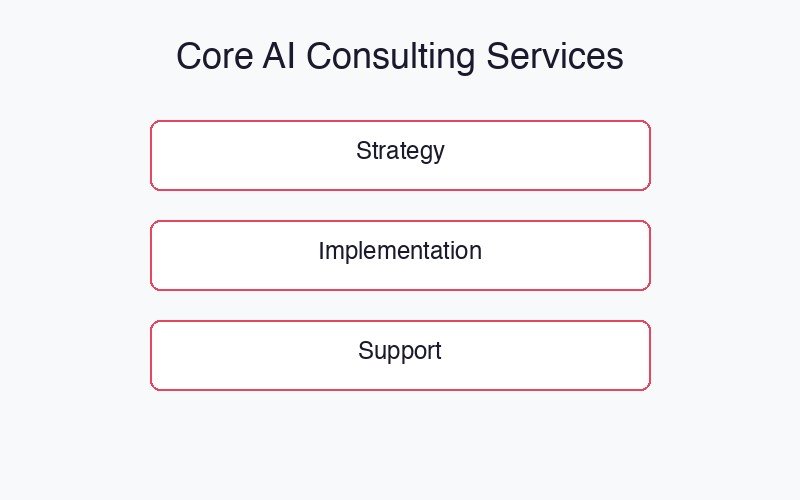
AI Strategy Consulting
Strategy consulting focuses on the “what” and “why” of AI initiatives before addressing the “how.” This includes:
- Use case identification: Systematically evaluating business processes to identify high-value AI opportunities, prioritising based on feasibility, potential impact, and strategic alignment
- Capability assessment: Evaluating existing data assets, technical infrastructure, and organisational readiness for AI adoption
- Roadmap development: Creating phased implementation plans that balance quick wins with transformational long-term initiatives
- Governance design: Establishing decision-making frameworks, ethical guidelines, and risk management protocols for AI initiatives
Our approach at Anitech AI emphasises business outcome alignment from the outset. We reject the technology-first mindset that leads to “AI for AI’s sake” projects, instead ensuring every initiative directly supports measurable business objectives.
Strategy consulting engagements typically begin with workshops involving key stakeholders from business units, IT, and executive leadership. These sessions surface the real pain points and opportunities that AI might address. We then validate these opportunities through data assessments, market research, and competitive analysis before developing recommendations. The deliverable is a comprehensive AI strategy document—typically 40-60 pages—that provides a clear roadmap for the next 12-36 months, with detailed project plans for the first 90 days.
AI Implementation Consulting
Implementation services translate strategies into working systems. This encompasses:
- Solution architecture: Designing technical architectures that balance performance, cost, scalability, and maintainability
- Model development: Building custom machine learning models or configuring and fine-tuning pre-built solutions to meet specific requirements
- Data engineering: Creating pipelines that feed clean, relevant data to AI systems at appropriate frequencies
- Integration: Connecting AI capabilities with existing business systems, whether legacy ERP platforms, modern cloud applications, or real-time operational systems
- Testing and validation: Rigorously evaluating model performance, robustness, and fairness before production deployment
AI Training and Capability Building
Sustainable AI success requires internal capability. Training services include:
- Executive education: Helping leadership understand AI capabilities, limitations, and strategic implications without getting lost in technical details
- Technical upskilling: Training internal data scientists, engineers, and analysts on modern AI tools, frameworks, and best practices
- Change management: Preparing workforces for AI-augmented roles and addressing concerns about automation and job displacement
- Centre of excellence establishment: Structuring internal teams and processes to support ongoing AI innovation
AI Support and Optimisation
AI systems require ongoing attention after deployment:
- Model monitoring: Tracking performance metrics and detecting drift or degradation over time
- Continuous improvement: Retraining models with new data, refining algorithms, and expanding capabilities
- Incident response: Addressing unexpected behaviours, security vulnerabilities, or performance issues
- Regulatory compliance: Ensuring ongoing adherence to evolving privacy, ethical, and industry-specific requirements
AI Implementation Process
While every AI project has unique characteristics, successful implementations typically follow a structured process. At Anitech AI, we employ a five-phase methodology that has guided over 200 successful deployments.
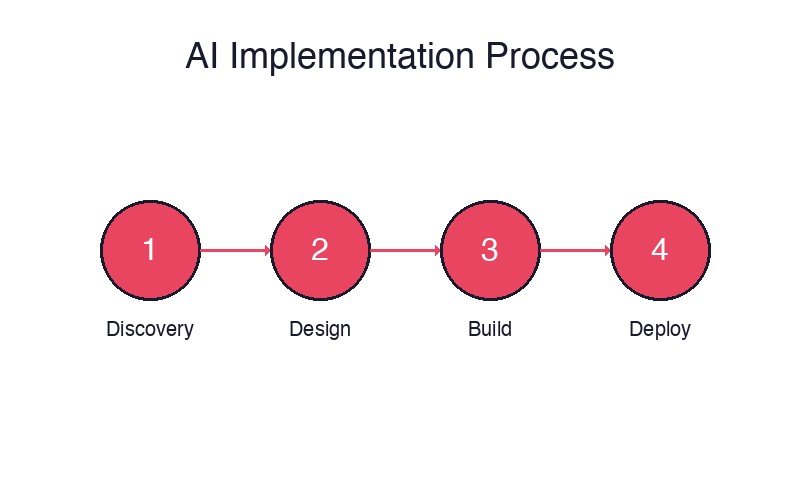
Phase 1: Discovery
The discovery phase establishes the foundation for everything that follows. Activities include:
- Stakeholder interviews to understand business objectives, constraints, and success criteria
- Data assessment evaluating availability, quality, and accessibility of relevant datasets
- Technical infrastructure review identifying gaps in compute resources, platforms, and tooling
- Competitive and market analysis contextualising the proposed initiative within industry trends
- Feasibility validation confirming that AI is genuinely the right approach for the stated problem
Discovery typically requires 2-4 weeks and culminates in a detailed project proposal including scope, timeline, resource requirements, and risk assessment.
Phase 2: Design
During design, we translate business requirements into technical specifications:
- Algorithm selection identifying the most appropriate machine learning approaches for the use case
- Architecture design specifying data flows, model deployment patterns, and integration points
- Data strategy defining how training data will be collected, labelled, and managed
- Ethics review evaluating potential biases, privacy implications, and societal impacts
- Success metrics establishing clear, measurable criteria for evaluating outcomes
The design phase produces comprehensive documentation that guides development while providing stakeholders with visibility into the proposed solution.
Phase 3: Build
Build is where theory becomes reality:
- Data preparation including cleaning, transformation, and feature engineering
- Model development involving training, validation, and iterative refinement
- Software engineering building application code, APIs, and user interfaces
- Integration work connecting the AI system with existing business applications
- Security implementation ensuring appropriate access controls, encryption, and audit logging
We emphasise agile development practices during build, with regular demos and checkpoints ensuring alignment with business expectations. Our typical build phase lasts 8-16 weeks depending on complexity, with weekly sprint reviews and monthly steering committee meetings. We maintain transparent communication throughout, providing clients with access to development environments and real-time progress dashboards.
Quality assurance is paramount during build. Every model undergoes rigorous validation including unit testing, integration testing, and stress testing. We also conduct fairness audits to identify potential biases, particularly for models affecting individuals in areas like lending, employment, or healthcare. Security reviews ensure appropriate access controls, encryption standards, and audit logging are implemented.
Phase 4: Deploy
Deployment transitions models from development environments to production:
- Infrastructure provisioning scaling compute and storage resources appropriately
- Model packaging containerising solutions for consistent deployment across environments
- Phased rollout often beginning with pilot user groups before broader release
- Monitoring setup establishing dashboards and alerting for key performance indicators
- Documentation completion including technical guides and user training materials
Phase 5: Optimise
Post-deployment, the focus shifts to continuous improvement:
- Performance monitoring tracking accuracy, latency, throughput, and business outcomes
- Feedback integration capturing real-world results to refine model behaviour
- Retraining cycles updating models as new data becomes available
- Expansion planning identifying adjacent use cases and scaling opportunities
- Knowledge capture documenting lessons learned to inform future initiatives
Industry Applications
AI consulting delivers value across virtually every sector. Here is how Australian organisations in key industries are applying AI, with examples drawn from our experience at Anitech AI.
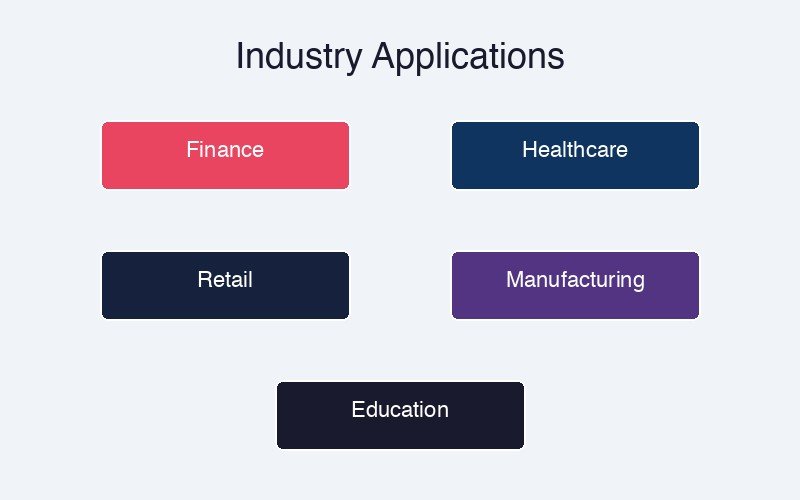
Financial Services
Australian banks, insurers, and wealth managers are among the most sophisticated AI adopters:
- Fraud detection: Real-time analysis of transaction patterns to identify suspicious activity, reducing false positives by 40% compared to rule-based systems
- Credit decisioning: Machine learning models assessing lending risk using alternative data sources, enabling faster approvals and broader financial inclusion
- Algorithmic trading: Sophisticated models analysing market data to execute trades at optimal prices
- Customer service: Intelligent virtual assistants handling routine enquiries, freeing human agents for complex issues
- Regulatory compliance: Natural language processing analysing communications and documents to identify compliance risks
We recently partnered with a Sydney-based financial institution to implement an AI-powered anti-money laundering system that reduced investigation times by 60% while improving detection accuracy.
Healthcare
From major hospitals in Melbourne to remote clinics in Queensland, healthcare AI is transforming patient care:
- Diagnostic imaging: AI systems analysing radiology images to detect anomalies, prioritise urgent cases, and reduce diagnostic errors
- Clinical decision support: Systems suggesting treatment options based on patient history, current evidence, and best practice guidelines
- Predictive analytics: Identifying patients at risk of deterioration, readmission, or complications before they occur
- Drug discovery: Accelerating pharmaceutical research by predicting molecular behaviour and identifying promising compounds
- Administrative automation: Reducing documentation burden on clinicians through automated transcription and coding
Anitech AI has delivered projects for healthcare providers across Australia, always ensuring strict compliance with TGA requirements and privacy regulations.
Retail and Consumer Goods
Australian retailers are using AI to compete with global giants:
- Demand forecasting: Predicting sales patterns to optimise inventory levels and reduce waste
- Personalisation: Tailoring product recommendations, pricing, and promotions to individual customer preferences
- Dynamic pricing: Adjusting prices in real-time based on demand, competition, and stock levels
- Supply chain optimisation: Predicting disruptions and automatically rerouting logistics
- Visual search: Enabling customers to find products by uploading photos rather than typing descriptions
We helped a Melbourne-based fashion retailer implement an AI-driven recommendation engine that increased average order value by 23%.
Manufacturing
From food processing in regional Victoria to mining equipment in Western Australia, manufacturers are deploying AI to boost productivity:
- Predictive maintenance: Analysing equipment sensor data to predict failures before they occur, reducing downtime by up to 50%
- Quality inspection: Computer vision systems detecting defects faster and more consistently than human inspectors
- Process optimisation: AI algorithms adjusting production parameters in real-time to maximise yield and minimise waste
- Demand planning: Synchronising production schedules with customer demand and supply availability
- Workforce safety: Monitoring for unsafe conditions and behaviours, alerting supervisors to potential hazards
Government and Public Sector
Australian government agencies at federal, state, and local levels are adopting AI to improve citizen services:
- Service delivery: Chatbots and virtual assistants handling routine citizen enquiries
- Document processing: Automating the analysis of applications, permits, and compliance submissions
- Fraud detection: Identifying anomalous patterns in claims and payments
- Infrastructure planning: Predictive models optimising transport networks, utilities, and public facilities
- Emergency response: AI systems prioritising and routing emergency calls based on severity and resource availability
Government AI projects require particular attention to transparency, accountability, and fairness—areas where Anitech AI’s experience with public sector clients proves invaluable.
Selecting an AI Consulting Partner
Choosing the right consulting partner is among the most consequential decisions in your AI journey. The market includes global consultancies, boutique specialists, offshore providers, and internal IT vendors claiming AI capabilities. Here is how to evaluate your options.
Evaluation Criteria
Domain expertise: Has the consultant delivered successful projects in your specific industry? AI for healthcare differs fundamentally from AI for retail. Look for demonstrated experience solving problems similar to yours.
Technical depth: Can the team build custom solutions, or do they only configure off-the-shelf products? Do they have expertise in the specific technologies relevant to your use case—computer vision, natural language processing, predictive modelling?
Australian presence: Will you have access to senior consultants in Australian time zones? Can they meet face-to-face when required? Local knowledge of regulations, business culture, and market conditions matters.
Delivery track record: Ask for references from similar projects. How many of their AI initiatives reach production? What percentage achieve stated business outcomes?
Methodology: Do they follow structured, proven approaches or wing it project by project? Rigor matters when building systems that will make consequential decisions.
Knowledge transfer: Will they build internal capability, or create dependency on their ongoing involvement? The best partners make themselves dispensable.
Cultural fit: Can they communicate effectively with your technical and business stakeholders? Do they understand your risk tolerance and decision-making style?
Red Flags
Watch for these warning signs:
- Overpromising: Claims that AI will solve every problem or deliver impossible ROI should raise suspicion
- Technology obsession: Consultants who push specific tools or platforms without understanding your actual requirements
- Black box solutions: Inability to explain how their AI systems work or make decisions
- No Australian references: Reluctance to provide local client contacts or case studies
- Price opacity: Vague estimates that balloon once work begins
- Ethical blindness: Dismissal of concerns about bias, privacy, or societal impact
- Proof-of-concept purgatory: History of impressive demos that never translate to production systems
Questions to Ask
During vendor evaluation, consider asking:
- “Walk me through your three most similar completed projects. What went well? What would you do differently?”
- “How do you ensure AI solutions remain explainable and auditable?”
- “What percentage of your projects reach production deployment within 12 months?”
- “How do you handle data quality issues and model drift post-deployment?”
- “What happens if the solution does not achieve agreed outcomes?”
- “How will you transfer knowledge to our internal team?”
Why Anitech AI
At Anitech AI, we believe our differentiation lies in our track record, methodology, and values:
- Proven experience: Over 20 years in business, with 200+ successful AI projects delivered for Australian organisations
- Quality assurance: ISO 9001 and , ensuring rigorous processes and information security
- Local expertise: Australian-based consultants who understand local regulations, business conditions, and cultural nuances
- Outcome-based pricing: We tie our fees to achieving agreed business outcomes, not just delivering activity
- Capability building: Every engagement includes knowledge transfer to strengthen your internal AI competency
- Ethical commitment: We will not build systems that compromise safety, privacy, or fairness
ROI and Success Metrics
AI investments must demonstrate tangible business value. Here is how to measure the return on your AI consulting engagement.
Defining Success Before You Begin
Effective measurement starts during project planning. Before any development begins, establish:
- Primary business objectives: What specific outcomes must this project achieve? Revenue growth? Cost reduction? Customer satisfaction improvement?
- Quantifiable KPIs: How will we measure progress toward objectives? Establish baseline measurements and target improvements
- Measurement methodology: How will data be collected? Who is responsible? What is the review cadence?
- Time horizons: When should initial results appear? When will full value be realised?
Categories of AI Value
AI initiatives typically generate value across several dimensions:
Direct cost reduction: Automation reducing labour costs, predictive maintenance preventing expensive failures, optimisation reducing waste. These are often the easiest to quantify—simply compare before and after costs.
Revenue enhancement: Personalisation increasing conversion rates, demand forecasting enabling better stock availability, pricing optimisation improving margins. Attribution can be trickier here, requiring controlled experiments or statistical modelling.
Risk mitigation: Fraud detection preventing losses, compliance monitoring avoiding penalties, safety systems preventing incidents. Value these based on the probability and cost of the risks being addressed.
Capability expansion: AI enabling new products, services, or business models. These strategic benefits often have the highest long-term value but the most difficult near-term measurement.
Intangible benefits: Improved decision-making quality, employee satisfaction from eliminating tedious work, customer experience enhancements. While harder to quantify, these matter and should be captured through surveys and qualitative assessment.
Key Performance Indicators
Common AI success metrics include:
- Model performance: Accuracy, precision, recall, F1 scores—technical measures of how well the AI system performs its specific task
- System performance: Response times, throughput, uptime—the operational characteristics of the deployed solution
- Business metrics: Cost per transaction, revenue per customer, employee productivity—connecting AI to business outcomes
- Adoption metrics: User engagement rates, system utilisation, training completion—indicating organisational acceptance
- Ethical metrics: Fairness indicators, privacy compliance scores, explainability ratings—ensuring responsible AI
Realistic Expectations
We counsel clients to maintain realistic ROI expectations. AI projects typically follow a value curve: initial investment exceeds returns during development, with positive cash flow materialising post-deployment and increasing as the system scales and improves. Most enterprise AI initiatives achieve positive ROI within 12-24 months, though this varies significantly based on use case complexity and organisational readiness.
Be wary of consultants promising immediate returns or sky-high ROI percentages. Sustainable AI value comes from thoughtful implementation and continuous improvement, not magic bullets.
Common ROI Mistakes to Avoid
Organisations often undermine their own ROI measurement through avoidable errors. Failing to establish baseline metrics before implementation makes it impossible to quantify improvement. Measuring only technical performance—model accuracy, response times—ignores whether these translate into business value. Over-attributing benefits to AI when other factors contributed, or under-attributing when AI enabled broader process improvements, distorts the true picture. Focusing exclusively on quantitative metrics misses important qualitative benefits that may be equally valuable. Setting unrealistic timelines for value realisation leads to premature abandonment of promising initiatives. We counsel clients to establish comprehensive measurement frameworks before project commencement and review them quarterly throughout the engagement.
Building the Business Case
A compelling business case for AI consulting investment typically includes multiple value scenarios: conservative, realistic, and optimistic. The conservative scenario assumes modest improvements and higher costs. The realistic scenario reflects our best estimates based on comparable projects. The optimistic scenario considers potential compounding benefits and unexpected opportunities. We recommend decision-makers approve projects based on the conservative case while understanding the upside potential. This approach builds appropriate expectations and ensures initiatives remain viable even when initial results disappoint.
Future of AI in Australia
Understanding emerging trends helps organisations position themselves for long-term AI success.
Technological Trends
Generative AI maturation: Following the initial hype around tools like ChatGPT, Australian businesses are moving from experimentation to production deployment of generative AI. We expect rapid adoption in content creation, code generation, and conversational interfaces, tempered by growing attention to accuracy, copyright, and security concerns.
Multimodal AI: Systems that process and generate multiple data types—text, images, audio, video—simultaneously are opening new application areas. Australian organisations will leverage these capabilities for richer customer experiences and more comprehensive analytics.
Edge AI: Running AI models on local devices rather than centralised cloud infrastructure addresses latency, privacy, and connectivity concerns. This trend particularly benefits regional Australia and use cases requiring real-time processing.
Automated machine learning (AutoML): Tools that automate aspects of model development are democratising AI, enabling organisations to build solutions with less specialised expertise. However, human oversight and domain expertise remain essential for production systems.
Regulatory Evolution
Australia’s AI regulatory landscape will likely tighten. The Australian Government is consulting on potential mandatory obligations for high-risk AI applications, particularly in areas like facial recognition, predictive policing, and automated decision-making affecting individuals. Organisations should prepare for increased compliance requirements and consider voluntary adoption of emerging standards before they become mandatory.
Industry Developments
We anticipate sector-specific AI accelerations:
- Healthcare: Telehealth integration, personalised medicine, and aged care automation addressing workforce shortages
- Resources: Autonomous operations, environmental monitoring, and decarbonisation optimisation in mining and energy
- Agriculture: Precision farming, supply chain optimisation, and climate adaptation supporting Australia’s food security
- Financial services: Open banking integration, climate risk modelling, and enhanced cyber defence
Skills and Workforce
The demand for AI talent continues to outpace supply. Australian organisations must invest heavily in upskilling existing workforces while competing globally for scarce specialists. The winners will be those who create attractive environments for AI professionals—interesting problems, modern tools, ethical frameworks, and genuine autonomy. At Anitech AI, we have invested significantly in developing local talent, partnering with Australian universities to create pathways for graduates and running internal academies that transform experienced technologists into AI specialists.
Environmental Sustainability
AI’s role in environmental sustainability is growing rapidly. Australian organisations are deploying AI to optimise energy consumption, reduce waste, monitor environmental conditions, and accelerate decarbonisation efforts. Machine learning models analyse satellite imagery to detect deforestation, illegal fishing, and land degradation. Predictive algorithms optimise renewable energy generation and distribution. Smart systems reduce resource consumption across supply chains. As environmental regulations tighten and consumer preferences shift toward sustainable products, AI will become an essential tool for meeting sustainability commitments.
Cybersecurity and AI
The intersection of AI and cybersecurity presents both opportunities and risks. Australian organisations are deploying AI-powered security systems to detect anomalies, identify threats, and respond to incidents faster than human analysts can manage. Machine learning models analyse network traffic patterns to identify zero-day attacks and sophisticated intrusions. Natural language processing monitors communications for phishing attempts and social engineering. However, threat actors are also using AI to develop more sophisticated attacks, creating an arms race that requires constant vigilance. Consulting partners must help organisations navigate both defensive and offensive AI applications in the cybersecurity domain.
Conclusion and Next Steps
Artificial intelligence represents one of the most significant opportunities—and challenges—facing Australian businesses today. Organisations that approach AI strategically, with appropriate expertise and realistic expectations, are achieving transformative results: dramatic cost reductions, enhanced customer experiences, new revenue streams, and competitive advantages that compound over time.
However, AI success is not automatic. It requires careful planning, rigorous execution, continuous improvement, and ethical vigilance. The gap between AI’s potential and its practical realisation is where experienced consulting partners prove their value—guiding organisations past the pitfalls that derail initiatives and toward sustainable, scalable value.
At Anitech AI, we have spent over two decades helping Australian organisations navigate technology transformations. Our ISO-certified processes, local expertise, and outcome-focused approach have delivered successful AI implementations for 200+ clients across every major industry. We understand the Australian regulatory environment, the unique challenges of our market, and what it takes to move from AI ambition to AI achievement.
Ready to Explore AI for Your Organisation?
If you are evaluating AI opportunities, planning an implementation, or seeking to optimise existing initiatives, we invite you to start a conversation.
Contact us today:
- Website: www.anitech.ai
- Email: sales@anitechgroup.com
- Phone: +61 (0) XXX XXX XXX
We offer complimentary initial consultations to assess your AI readiness, explore potential use cases, and discuss how Anitech AI can support your journey. Whether you are taking your first steps into artificial intelligence or scaling mature capabilities, we look forward to helping you achieve your ambitions.
Isaac Patturajan
Managing Director
Anitech AI
Anitech AI is ISO 9001 and , with over 20 years of experience delivering technology solutions to Australian organisations. We have completed more than 200 AI and data projects across finance, healthcare, retail, manufacturing, government, and other sectors.
Related Industry Solutions
- Small Business AI Solutions — Affordable AI for Australian SMEs
- Healthcare AI Implementation — Medical AI with compliance
- Financial Services AI — Banking and finance solutions
- AI Implementation Roadmap — Strategic planning guide
Industry-Specific AI Solutions
- Small Business AI — Affordable solutions for SMEs
- Healthcare AI — Medical AI with compliance
- Financial Services AI — Banking and finance solutions
- AI Implementation Roadmap — Strategic planning guide
Comments are closed.