
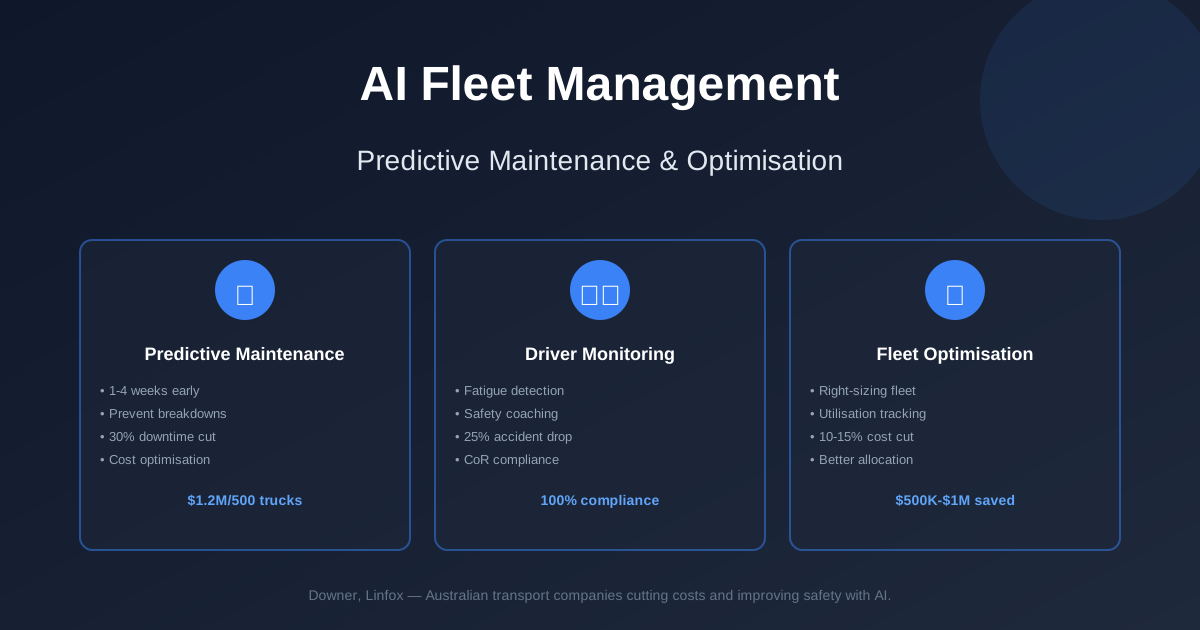
AI Fleet Management for Australian Transport Companies: Predictive Maintenance and Optimisation
Heavy vehicle fleet management is a complex balancing act. Maintain vehicle reliability while minimising maintenance costs. Monitor driver safety and compliance. Optimise fuel consumption. Manage capital expenditure on vehicles. An unexpected vehicle breakdown costs $500–$2,000 in lost productivity per hour. Traditional “fix-it-when-it-breaks” approaches are expensive. AI fleet management uses real-time telematics data to predict vehicle failures weeks in advance, optimise maintenance scheduling, reduce fuel consumption, monitor driver behaviour, and ensure Chain of Responsibility (CoR) compliance.
This guide reveals how Australian transport companies are deploying AI fleet management—and the results.
The Challenge: Heavy Vehicle Fleet Operations in Australia
Australian transport companies face unique challenges:
- Vehicle downtime cost: $500–$2,000 per hour per vehicle (off road = no revenue)
- Maintenance unpredictability: Breakdowns happen without warning; emergency repairs expensive
- Fuel costs: 20–30% of operating costs; volatile fuel prices impact margins
- Driver shortage: 20,000+ heavy vehicle driver shortfall; wages rising 15–20% annually
- Compliance complexity: Chain of Responsibility, NHVR regulations, state-based rules
- Safety expectations: Zero fatalities goal; driver monitoring critical
- Capital constraints: Fleet replacement cycles (12–15 years) require significant capex
The result:
– Fleet utilisation: 70–75% (too much downtime)
– Maintenance cost: 15–20% of operating budget
– Fuel consumption: Not optimised (driver behaviour varies; can save 5–10%)
– Driver turnover: 20–25% annually (compliance, safety concerns, fatigue)
How AI Fleet Management Works
1. Telematics Data Collection
Vehicles equipped with sensors capture real-time data:
– Engine diagnostics: Oil pressure, coolant temperature, fuel consumption, fault codes
– Transmission: Shifting patterns, clutch wear indicators
– Brakes: Brake pressure, wear rate, emergency braking events
– Suspension: Shock absorber performance, load weight
– Location & speed: GPS, speed, idle time
– Driver behaviour: Acceleration, braking, cornering, mobile phone use, seatbelt
– Fuel: Consumption per litre, fuel card reconciliation
Data transmitted to cloud every 5–10 minutes; analysed in real-time.
2. Predictive Maintenance Modelling
Machine learning models trained on historical failure data predict:
– Engine failure: Oil pressure decline, coolant temp spikes predict imminent failure (2–4 weeks)
– Transmission failure: Shifting delays, transmission fault codes predict failure (1–3 weeks)
– Brake wear: Brake pressure sensors track wear; predict replacement need (1–2 weeks)
– Electrical failure: Battery voltage decline predicts battery failure (1–2 days)
– Tire wear: Load and speed data predict tire failure (1–3 weeks)
Alerts trigger before failure occurs; maintenance scheduled proactively.
3. Maintenance Optimisation
AI schedule maintenance strategically:
– Consolidation: Schedule multiple services simultaneously (engine service + brake check + tire replacement in one visit)
– Timing: Schedule maintenance during low-utilisation periods (weekends, slow season)
– Parts procurement: Order parts just-in-time for scheduled maintenance (reduce inventory holding)
– Technician allocation: Schedule high-priority maintenance first; lower-priority services deferred if needed
Result: Maintenance performed efficiently, downtime minimised.
4. Driver Behaviour Monitoring
AI monitors driver safety and compliance:
– Aggressive driving: Excessive speed, hard braking, harsh acceleration trigger alerts
– Fatigue: Swerving, lane drifts, erratic driving detected; alerts issued
– Mobile phone use: Dangerous use detected via camera; drivers counselled
– Seatbelt compliance: Monitoring for belt use; alerts for non-compliance
– Work/rest logging: Automatic logging of driving hours; alerts for CoR violations
Real-time alerts to driver; reports to fleet manager; coaching and training for repeated violations.
5. Fuel Consumption Optimisation
AI identifies fuel-saving opportunities:
– Idling: Excessive idle time wastes fuel; alerts issued
– Speeding: Higher speeds reduce fuel efficiency; speed monitoring + coaching
– Acceleration: Aggressive acceleration uses extra fuel; smooth acceleration coached
– Route optimisation: Longer routes use more fuel; recommendations made
– Vehicle maintenance: Poor maintenance (low tire pressure, engine issues) reduces efficiency
Driver education + vehicle maintenance = 5–10% fuel savings.
Real-World Results: Australian Transport Companies
Case Study 1: Downer – 500-Vehicle Fleet Predictive Maintenance
Challenge: 500-vehicle fleet (mix of trucks, vans, buses). Current approach: fix-when-broken. Unexpected downtime: 12–15% annually. Maintenance cost: 18% of operating budget.
Solution: AI predictive maintenance system deployed fleet-wide:
1. Telematics installed on all vehicles
2. ML models trained on 3 years of historical maintenance data
3. Predictive alerts sent to maintenance team 1–4 weeks before predicted failure
4. Maintenance scheduled proactively
Results:
– Downtime reduction: 12–15% → 5–7% (saved 280–400 vehicle-days annually)
– Maintenance cost: 18% → 15% of operating budget ($1.2M annual savings)
– Fuel efficiency: 7% improvement through driver coaching
– Safety: Zero preventative maintenance-related accidents; improved reliability
Financial impact:
– Setup cost: $1M (telematics hardware, software)
– Annual savings: $2M (downtime reduction, maintenance efficiency, fuel savings)
– Payback: 6 months
Case Study 2: Linfox – Driver Safety and Compliance Monitoring
Challenge: 1,200-vehicle fleet. Safety record: 15 accidents per year. Driver fatigue and CoR non-compliance risks. Insurance costs: $8M annually.
Solution: Integrated driver monitoring system:
1. In-cabin camera + telematics on all vehicles
2. Real-time alerts for dangerous driving, fatigue signs, CoR violations
3. Driver coaching program (safety training, fatigue management)
4. Fleet manager dashboard for compliance monitoring
Results:
– Accident reduction: 15 → 4 accidents/year (27% reduction)
– Safety culture: Drivers engaged in safety; reduced risk-taking
– CoR compliance: 100% compliance; zero penalties
– Insurance premium: $8M → $7.2M (10% reduction due to safety improvements)
– Driver retention: Better safety culture improves recruitment/retention
Financial impact:
– Setup cost: $2.5M (cameras, telematics, software)
– Annual savings: $1.5M (insurance reduction, accident prevention, fuel)
– Payback: 18–24 months
Case Study 3: Transport Group – Fleet Right-Sizing with AI
Challenge: 150-vehicle fleet; unsure if right-sized. Some vehicles sit idle (capital tied up); others overworked. Fleet cost: $15M annually.
Solution: AI fleet utilisation analysis:
1. Track utilisation metrics for each vehicle (on-road hours, revenue per vehicle)
2. Identify underutilised vehicles
3. Consolidate routes to right-size fleet
4. Sell excess vehicles; reallocate capital
Results:
– Fleet reduction: 150 → 130 vehicles (-13%)
– Utilisation improvement: 70% → 82% average utilisation
– Capital release: $1.5M from vehicle sales
– Cost reduction: $15M → $13.5M annually (-$1.5M)
Financial impact:
– Setup cost: $300K (analysis, implementation)
– Annual savings: $1.5M (fleet cost reduction, capital release)
– Payback: 2–3 months
Types of AI Fleet Management Solutions
Telematics and Diagnostics
- Real-time vehicle health monitoring
- Predictive maintenance alerts
- Driver behaviour monitoring
- Fuel consumption tracking
Best for: Large fleets (50+ vehicles) where maintenance costs are significant.
Compliance Monitoring
- Automatic work/rest hour logging (CoR compliance)
- Speed and seatbelt monitoring
- Mobile phone use detection
- Fatigue and safety monitoring
Best for: All fleets; compliance is mandatory.
Fleet Utilisation Optimisation
- Analyse vehicle utilisation by route, driver, vehicle type
- Identify underutilised assets
- Right-size fleet
- Optimise vehicle allocation
Best for: Fleets with variable demand or multiple depots.
Dynamic Fuel Pricing and Carbon Tracking
- Monitor fuel consumption per vehicle, route, driver
- Carbon footprint tracking
- Sustainable logistics optimisation
Best for: Companies with sustainability goals or operating in carbon-constrained markets.
NHVR Compliance and Safety Standards
Australian transport companies must comply with National Heavy Vehicle Regulator (NHVR) rules:
Chain of Responsibility (CoR)
- Maximum driving time: 10 hours per day
- Mandatory break: 2 hours per 5 hours driving
- Rest requirements: Specific rest windows
AI solution: Automatic work/rest hour logging from telematics; alerts for CoR violations.
Heavy Vehicle National Law
- Vehicle maintenance standards
- Driver fitness standards
- Speed limits and monitoring
AI solution: Compliance dashboard monitors all standards; alerts for violations.
Safety Regulations
- Vehicle safety inspections
- Driver competency standards
- Accident investigation protocols
AI solution: Telematics data supports accident investigation; safety coaching improves driver behaviour.
Implementation Roadmap: AI Fleet Management Deployment
Phase 1: Assessment (Weeks 1–3)
- Current state: Measure downtime, maintenance cost, fuel consumption, safety incidents
- Fleet analysis: Identify priority issues (maintenance cost vs. downtime vs. fuel efficiency)
- Technology selection: Telematics provider, fleet management platform
- Data integration: Confirm systems can integrate with existing fleet management systems
Phase 2: Pilot Deployment (Weeks 4–12)
- Limited rollout: Deploy to 10–20% of fleet
- Data collection: Gather 4–6 weeks of telematics data
- Performance baseline: Measure current downtime, maintenance, fuel, safety
- Feedback: Collect driver feedback on monitoring systems
Phase 3: Model Development (Weeks 13–20)
- ML model training: Train predictive models on collected data
- Validation: Backtest models against historical data
- Integration: Connect models to fleet management platform
- Alert configuration: Set alert thresholds for maintenance, safety, compliance
Phase 4: Full Rollout (Week 21+)
- Fleet-wide deployment: Install telematics on all vehicles
- Driver training: Train drivers on monitoring systems, compliance
- Operational integration: Daily monitoring of alerts, maintenance scheduling
- Continuous improvement: Weekly KPI reviews; adjust thresholds as needed
Financial Model: AI Fleet Management ROI
Example: 200-vehicle fleet, $20M annual operating cost
| Metric | Without AI | With AI | Benefit |
|---|---|---|---|
| Downtime % | 12% | 6% | -6% |
| Maintenance cost ($M) | 3.6 | 2.8 | -$0.8M |
| Fuel cost ($M) | 6.0 | 5.7 | -$0.3M |
| Accidents/year | 12 | 8 | -4 accidents |
| Insurance cost ($M) | 0.8 | 0.7 | -$0.1M |
| Driver turnover | 22% | 18% | -4% |
| Recruitment cost ($K) | 350 | 280 | -$70K |
| Total annual savings | – | – | $1.27M |
| Setup cost (telematics, software) | – | – | $600K |
| First-year net benefit | – | – | $670K |
| Payback period | – | – | 5–7 months |
Frequently Asked Questions
Q: Will drivers object to monitoring?
A: Initially, yes. But once drivers see safety benefits (fewer accidents, better working conditions), acceptance is high. Key: communicate that monitoring is for safety, not punishment; involve drivers in design.
Q: What if vehicles are older (pre-2010)?
A: Older vehicles may not have diagnostic ports for telematics. Aftermarket telematics devices can be installed (cost $1–2K per vehicle). Recommend telematics on newer vehicles first; older vehicles phased out.
Q: How accurate are predictive maintenance alerts?
A: Accuracy depends on data quality and model training. Typical accuracy: 80–85% for engine failures. False positives: 10–15%. Trade-off: it’s better to schedule unnecessary maintenance than miss a catastrophic failure.
Q: What about data privacy and driver trust?
A: Telematics data is business data (owned by company). Driver monitoring for safety (in-cabin camera) requires consent; communicate purpose clearly. Compliance is key to driver acceptance.
Q: How long to deploy?
A: Pilot (10–20% fleet): 6–8 weeks. Full deployment: 4–6 months for hardware installation. ML models ready for full fleet within 2–3 months of pilot completion.
Q: What if we have mixed vehicle types (trucks, vans, buses)?
A: Telematics works across vehicle types. Predictive models may vary slightly (truck engine failure different from bus engine failure). Most platforms handle mixed fleets well.
Best Practices for Successful Deployment
- Start with highest-cost issue: Usually maintenance; focus there first
- Invest in driver training: Safety coaching is critical to success
- Monitor KPIs religiously: Weekly downtime, maintenance cost, fuel tracking
- Build driver support: Involve drivers in design; communicate safety focus
- Use data for continuous improvement: Regular model updates as conditions change
The Future: Autonomous Fleet Management
AI fleet management is evolving:
1. Autonomous vehicles: Driverless trucks for long-haul freight (2025–2028)
2. Predictive network effects: AI optimises across entire fleet simultaneously
3. Sustainable logistics: Fleet optimised for carbon footprint, not just cost
4. Insurance integration: Risk-based insurance pricing based on AI data
Australian transport companies are pioneering this future—now.
Ready to Optimise Your Fleet?
Anitech AI has supported 25+ Australian transport and logistics companies in deploying AI fleet management solutions. We know Australian compliance requirements, vehicle types, and operational constraints. Let’s discuss your priority opportunity.
[CTA Button: Request a Fleet Management Assessment]
Published: April 2025 | Updated: [Current Date] | Author: Anitech AI | Related: Pillar Page on Logistics AI
Further Reading
- AI Automation Australia — Complete Guide
- AI in Logistics and Supply Chain Management: The Australian Business Guide (2025) — Industry Guide
- AI Route Optimisation for Australian Freight and Delivery Companies
- AI Warehouse Automation in Australia: Smarter Picking, Packing, and Fulfilment
- AI Demand Forecasting for Supply Chain: Precision Inventory Planning
- Last-Mile Delivery Automation: AI Solutions for Australian E-Commerce Logistics